
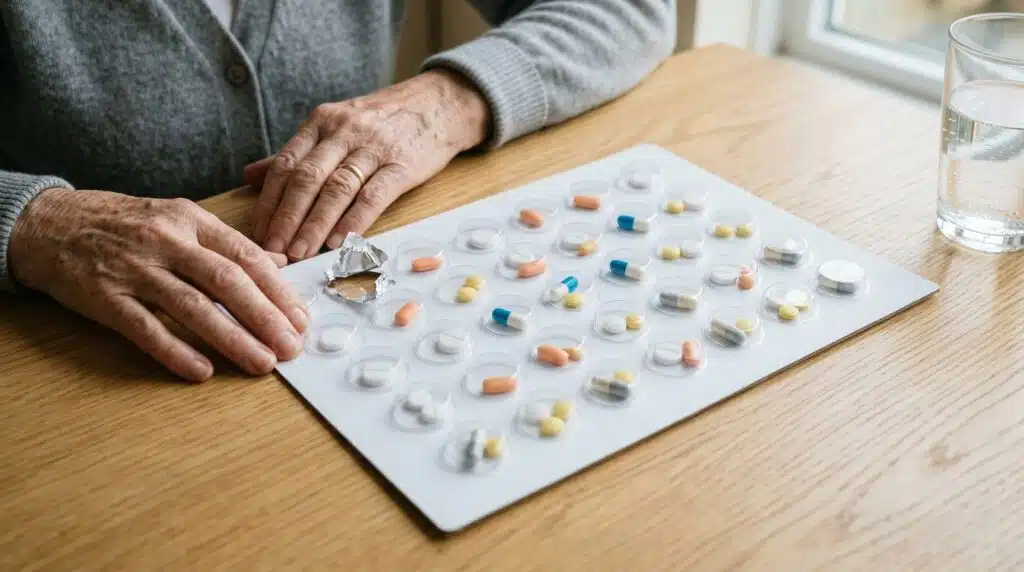
Questions about Webster pak eligibility often come from a family member who has noticed tablets going untaken, or from someone juggling a growing list of scripts. At Abermain Chemist the answer starts well: free Webster-pak medication packing is one of the pharmacy’s listed services. This article explains what the Government’s own rules say, who gets the most from a sealed pack, and how to get ready for a first conversation with the pharmacist.
Key Takeaways
- Abermain Chemist lists Webster-paks among its free services.
- The Government’s DAA Program has its own criteria, including a valid concession card.
- Aboriginal and Torres Strait Islander people have a separate, uncapped program.
- A written list of everything you take makes the first pack easier to set up.
What counts as a Webster-pak?
Webster-pak is the name most people know, but pharmacists call it a dose administration aid (DAA). According to the Pharmacy Programs Administrator (PPA), a DAA is a sealed, tamper-evident device holding individual doses in line with the dose schedule determined by the prescriber. In plain terms, the pharmacist does the sorting for you.
That is quite different from a pill organiser bought off the shelf. Healthdirect calls those a weekly dosing aid, a container you refill with your own tablets every seven days.
Who tends to benefit from a pack
Healthdirect uses the word polypharmacy for taking five or more medicines, and says people doing so daily are more prone to medicine mistakes. The same page names conditions that can make medicines harder to manage, such as poor eyesight, arthritis and memory loss.
Carers see the warning signs first. Healthdirect’s advice for carers of older people mentions forgetfulness, confusion and feeling dizzy or unsteady, and notes these could be side effects of medicines. If any of that sounds familiar, raise it with a doctor or pharmacist, and never stop or change a medicine without talking to one of them first.
What the Government DAA Program says
The Australian Government funds pharmacies to provide DAAs through several programs. Their criteria explain who the funding is meant for, so they are useful background for anyone asking about eligibility.
| Program | Who it covers |
|---|---|
| DAA Program | People living at home in the community who hold a Medicare or DVA card (or are eligible for Medicare) and a valid government concession card, and who struggle with medicines owing to literacy or language issues, a physical disability or cognitive difficulties, or who are on five or more prescription medicines and finding them hard to manage (PPA patient criteria). |
| Indigenous DAA Program | People who identify as Aboriginal and/or Torres Strait Islander, live at home, are likely to benefit as identified by a prescriber or another healthcare provider, and face the same kinds of difficulty, with the threshold set at a single prescription medicine or more (IDAA patient criteria). |
| Veterans | Healthdirect notes that veterans may be eligible for the Dose Administration Aid service through the Department of Veterans’ Affairs. |
Which concession cards count
According to the PPA program FAQ, the accepted cards are the Pensioner Concession Card, the Commonwealth Seniors Health Card, the Health Care Card (including the Low Income Health Care Card) and DVA Gold, White or Orange cards. The PBS Safety Net card is not an eligible concession card under the program.
Who the program leaves out
The PPA rules exclude people who are currently hospital in-patients, residents of an aged care facility or correctional facility, or already funded through another government DAA program such as the DVA one.
Where Abermain Chemist fits in
Those rules describe what the Government pays pharmacies for. They are not the whole story at Abermain Chemist, which offers Webster-paks free. For most people, the more useful question is whether a sealed pack suits their particular medicines and routine, and that is a conversation for the pharmacist.
Wondering whether a Webster-pak would help you or someone you care for? Ring the pharmacy and a pharmacist will go through it with you.
Getting ready for your first pack
A pack is only as accurate as the information behind it. Before you call, put together a written medicines list. Healthdirect suggests noting what each medicine is for, the dose, when you take it and how, for example with food, and including vitamins and complementary medicines.
- Gather every box and bottle, including anything bought without a script.
- Note which doctor prescribed what, if you see more than one.
- Bring any hospital discharge papers from a recent stay.
If the list is long or comes from several prescribers, a medication review at Abermain Chemist is worth considering first. Healthdirect says medicines should ideally be checked every 6 to 12 months, and whenever one is started or stopped.
Once your packs are running, they can travel with the pharmacy’s free local delivery to Abermain, Cessnock, Weston and Kurri Kurri.
Frequently asked questions
Do I need a concession card to get a Webster-pak here?
The card requirement comes from the Commonwealth-funded program described above, while Webster-paks are listed as free at Abermain Chemist, so phone the pharmacy to confirm how that applies to your situation.
Can my GP ask for a pack on my behalf?
Under the Indigenous program, being identified by your doctor or another health professional as someone likely to gain from a DAA counts among the criteria. For anyone else, you or your carer can simply contact the pharmacy directly.
Is a pharmacist home visit available instead?
That is a different service. A Home Medicines Review is where a pharmacist visits you at home, and Healthdirect says it needs a referral from a doctor and is free of charge.
Bring your medicines list to 193 Cessnock Rd, or phone first, and ask whether packing your medicines would make the week easier.